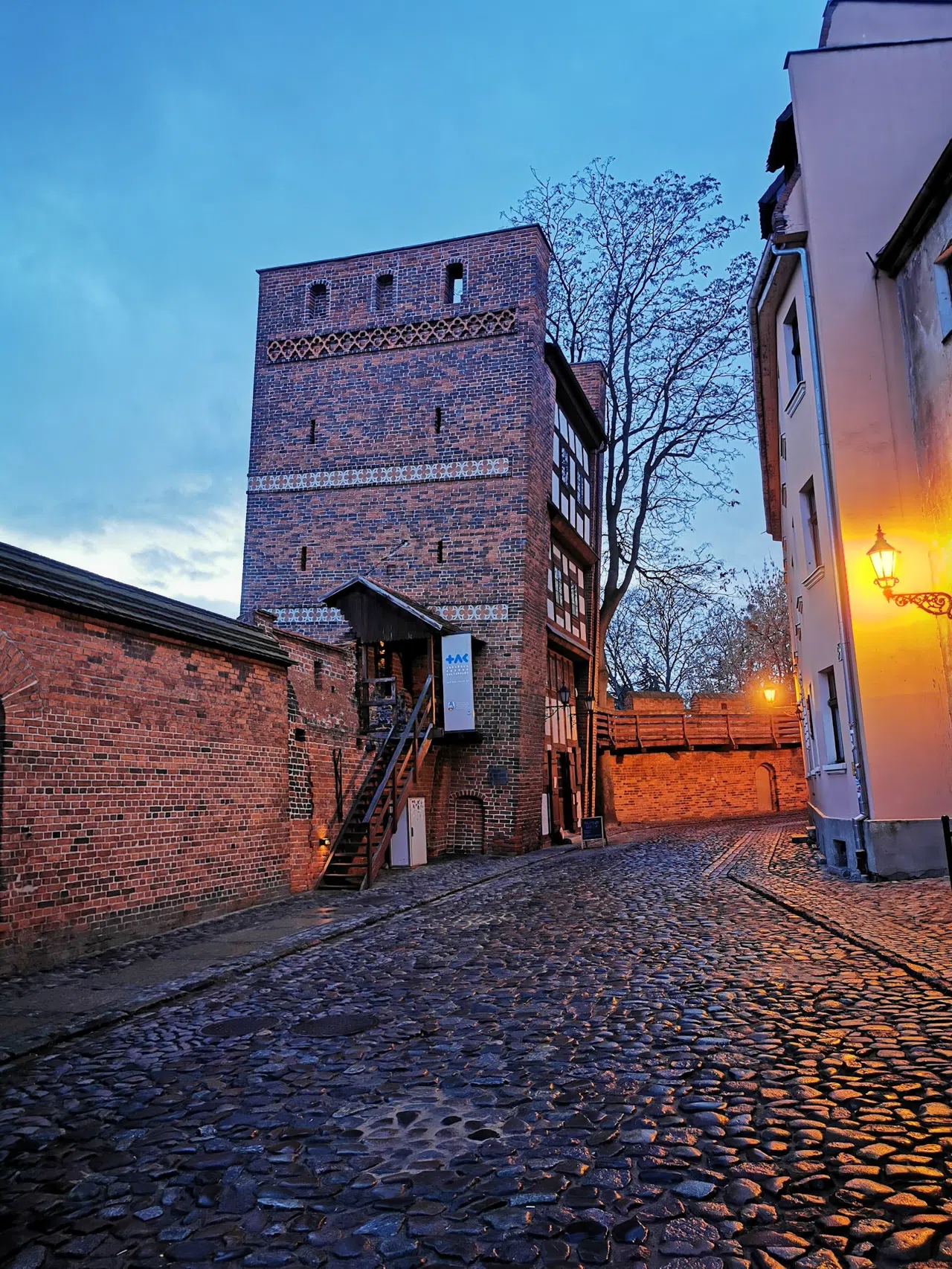

Walk into the café built into the base of Toruń's crooked tower, order a coffee, and set it down — the floor genuinely tilts under the cup. It isn't a restoration trick or a tourist gimmick. It's a 14th-century brick tower still standing precisely where its foundation slipped centuries ago, in a walled river town that built more Gothic brick than almost anywhere else in northern Europe and then largely stopped. That lean is the postcard. The rest of the town — a brick cathedral, a vast Gothic town hall, parish churches, riverside walls and gates, a second castle almost nobody crosses the bridge for — is the part most itineraries skip.
The Tower That Started It
Krzywa Wieża (Leaning Tower), tucked into the surviving stretch of city wall on the Old Town's southern edge, was built in the second half of the 14th century as a defensive tower in Toruń's original fortification ring. It leans not because of war damage or old age but because it was raised on ground that was never stable — a patch of shifted, sandy clay near what was once the riverbank, and the tower simply settled off true as the centuries passed. Local legend prefers a story about a disgraced Teutonic Knight ordered to build a tower as penance, which is a better story than an engineering one, but the honest answer is soil, not sin.
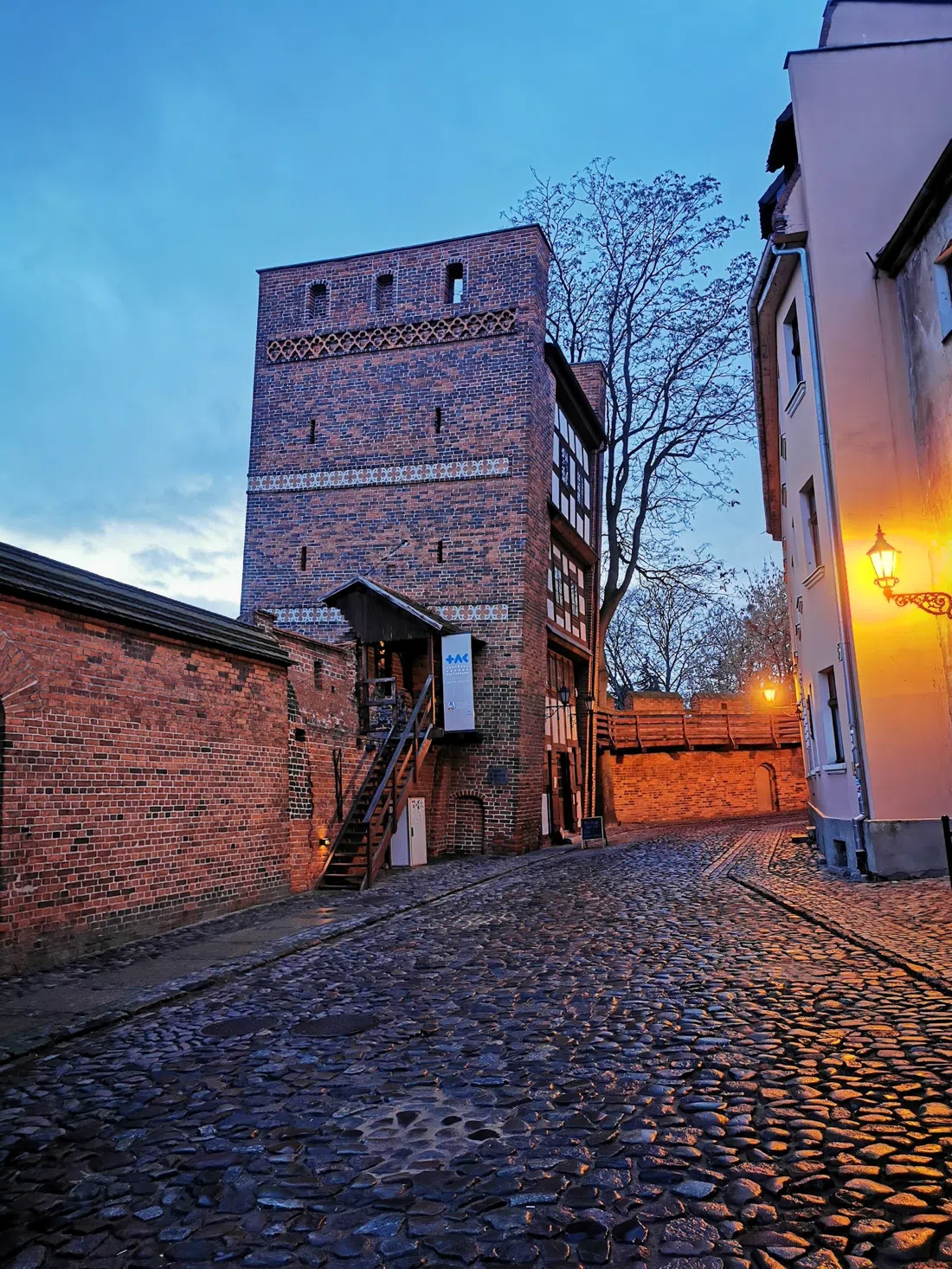
Today the tower holds a small café and a single tiny museum room explaining the tilt and the tower's defensive history — there is no interior climb to a viewing platform, so the visit is really about standing at the base, feeling the physical wrongness of the angle, and photographing the exterior against the old wall. It's a five-minute stop rather than an hour, and that's fine: entry runs roughly 20 PLN for adults and 12 PLN reduced, and the interior is genuinely small, so groups of 15-20 can gather to view and photograph it together, but anyone leading a bigger party should plan to split for the inside and let people rotate through in twos and threes.
The Old Town's Gothic Giants
The tower gets the postcard, but the buildings that actually explain why Toruń's Old Town carries UNESCO World Heritage status stand a few streets north, around and inside the Old Town Market Square.
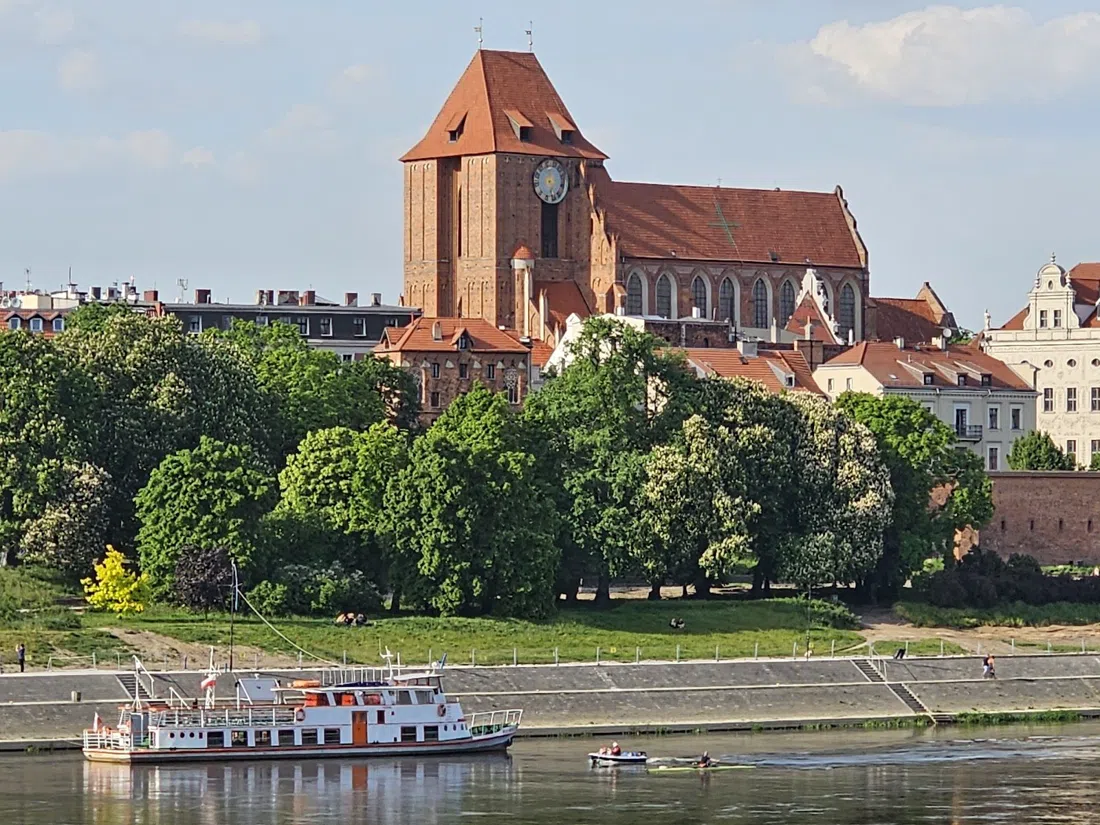
St. John's Cathedral & Cathedral Tower (Katedra Świętych Janów) is the single largest brick-Gothic mass in the city — a red-brick basilica built up over more than two centuries from the 13th century onward, raised to cathedral rank in the 1990s. Most visitors do exactly what they do with the leaning tower: photograph the outside and move on. That's a mistake, because the tower climb — around 200 steps up a narrow spiral stair — passes one of the largest Gothic bells in Poland on the way to a rooftop view over the Old Town's red-tile roofline that the leaning tower itself can't give you, since it has no public viewing platform. The stair is genuinely narrow, so tour groups and school parties, both common here, climb in small batches rather than as one file; if you're leading a group, expect to queue and split rather than move everyone through together. The tower costs around 7 PLN for adults and 5 PLN reduced; the church itself is free to enter, donation-based.
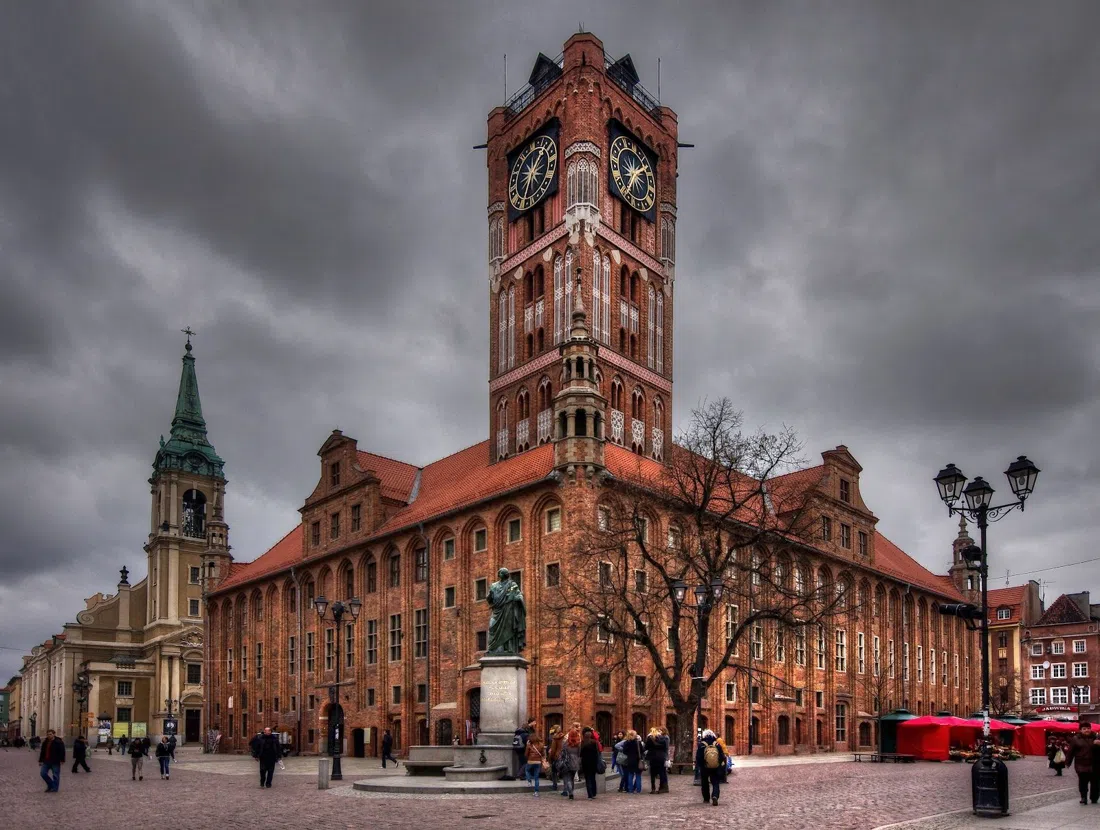
The Old Town Hall & Tower (Ratusz Staromiejski), dominating the main square, is the actual architectural counterweight to the leaning tower and, for most visitors, the building they photograph from a café table and never enter. That's a shame, because it's one of the largest Gothic town halls in Central Europe, now home to the Regional Museum, which runs scheduled group and guided visits through its halls — the exhibitions are a separate ticket from the tower climb. The tower climb costs around 28 PLN for adults and 24 PLN reduced, and the building is closed Mondays, worth building into a Toruń itinerary before you plan around it, since it's the one closure day that catches people out. Climbing here rather than the cathedral gets you the view with the leaning tower itself in the frame, which the cathedral's angle doesn't give you as cleanly.
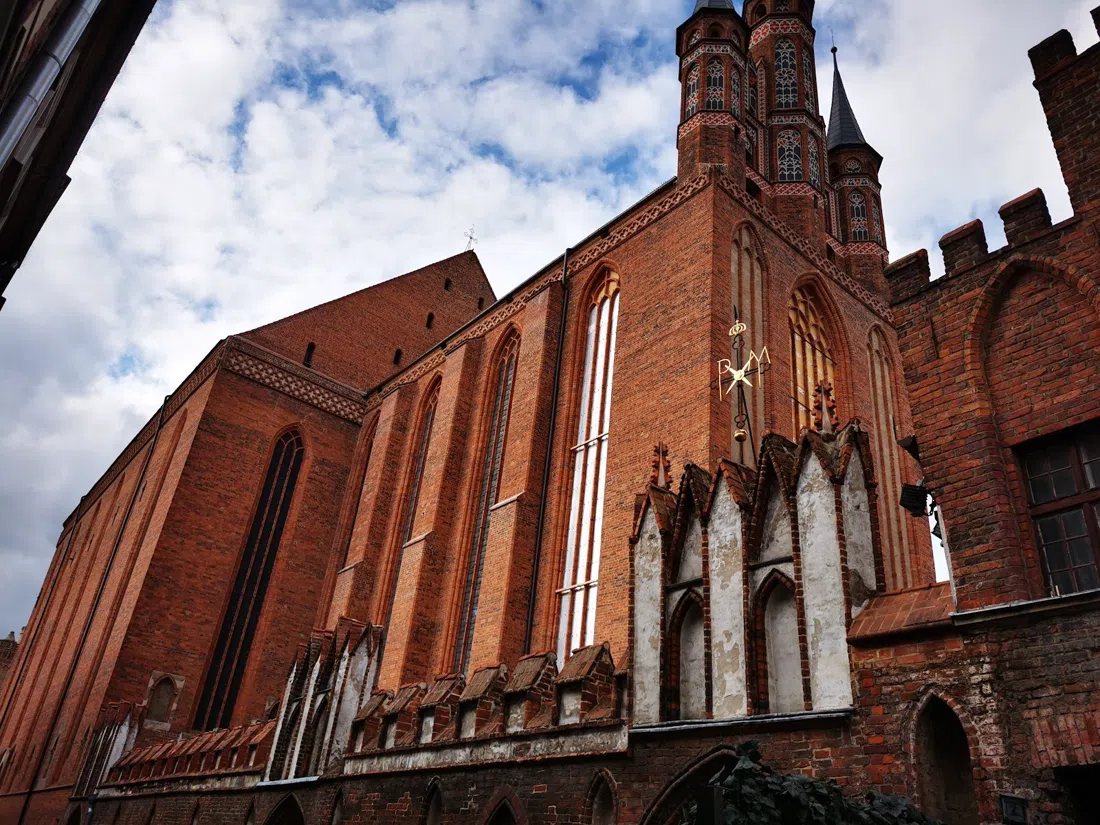
A block off the square, the Church of the Assumption of the Blessed Virgin Mary (Kościół NMP) is easy to miss because it does something unusual for a major Gothic church: it has no tower. It was built under Franciscan influence, and the order's rule discouraged the kind of tall bell tower that defines the cathedral and town hall nearby, so from a distance it reads as a large roofline rather than a landmark spire. Up close it's one of the three largest Gothic city churches in northern Poland, with an interior large enough to handle a full tour group comfortably, and it's free to enter with a donation welcomed. Because it doesn't announce itself the way a tower does, it's the building on this list most likely to get walked straight past.
The New Town, Five Minutes and a World Away
Toruń was, for its first few centuries, two separate walled towns — the Old Town and, immediately east of it, a New Town founded for craftsmen rather than merchants. The line between them is a five-minute walk, and almost nobody who isn't specifically looking makes it.
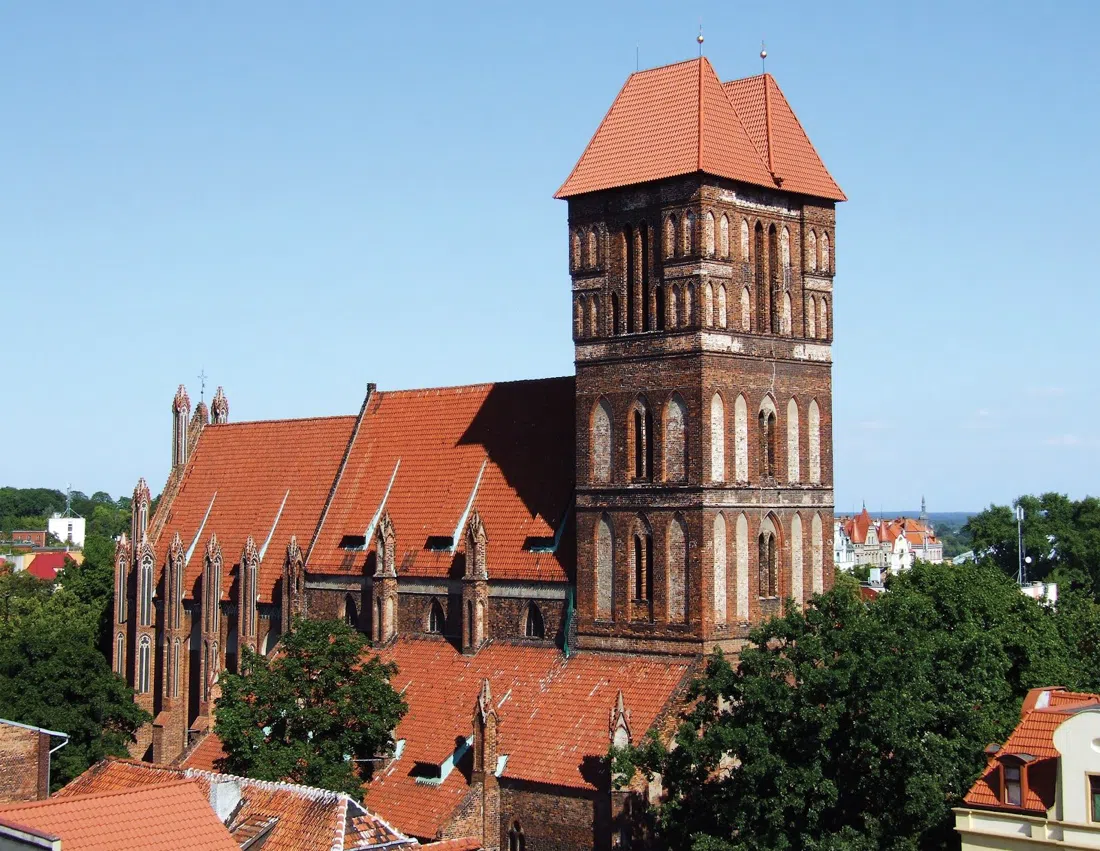
The Church of St. James (Kościół św. Jakuba), in the New Town, was funded during the Teutonic Order's rule and is unusual among Toruń's Gothic churches for its flying buttresses — a structural feature rarer in Baltic brick Gothic than in stone Gothic traditions further afield, and rare enough here to be worth the detour on its own. It's open for casual visiting Monday to Saturday, 10:00 to 16:00, and Sunday 14:00 to 16:00, welcomes groups outside Mass times, and costs nothing beyond a donation. Because it sits just outside the Old Town's main pedestrian flow, it's usually quiet even when the market square is not.
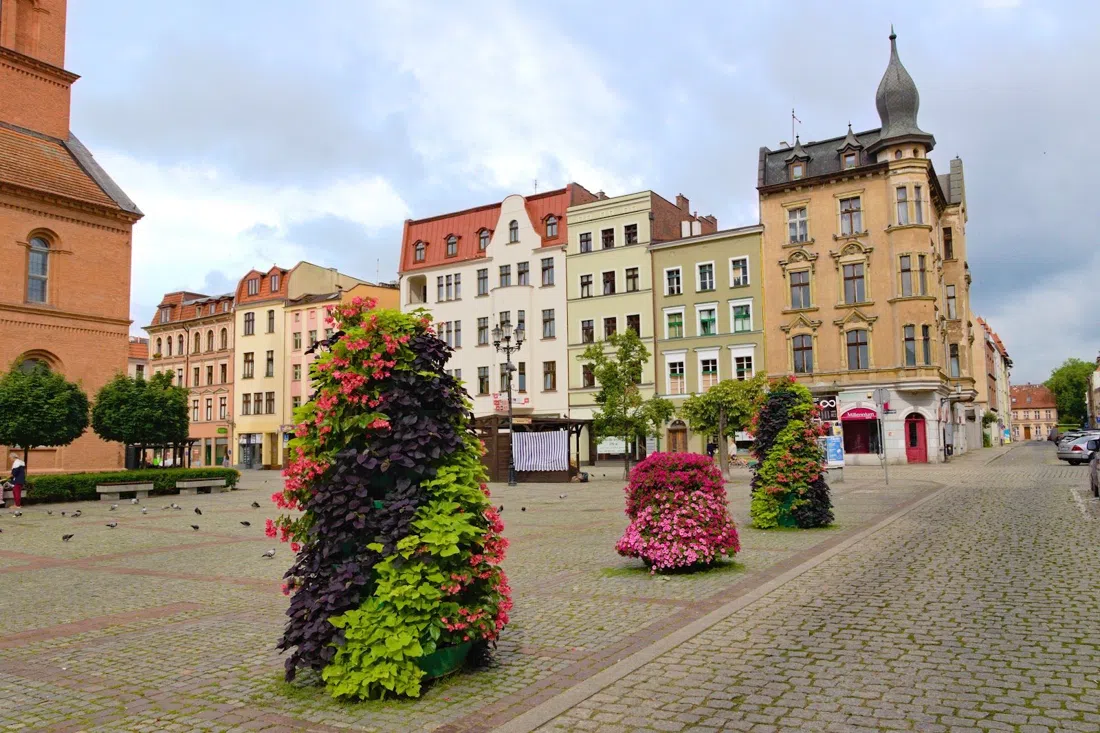
Around the corner, the New Town Market Square (Rynek Nowomiejski) is the New Town's own square — smaller, plainer, and built by craftsmen's guilds rather than the merchant elite who built the grander Old Town square. The houses are lower and less ornamented, but they're built from the same brick-Gothic vocabulary, and the square is a genuinely useful comparison point if you've just come from the Old Town Hall: it shows you what Gothic Toruń looked like for people who weren't merchants. It's a public open square with no entry restriction and no group-size limit, and it's routinely left off the standard walking route — which is precisely why it's worth the ten extra minutes.
The Walls the Guidebooks Compress Into One Photo
Most guidebook coverage of Toruń's fortifications is a single photograph of the leaning tower with a caption mentioning that the town once had defensive walls. It did — 54 towers and 11 gates at the medieval peak — and a genuinely well-preserved stretch of them survives along the river.
Toruń's Medieval City Walls, Gothic Gates & Barbicans, along the Bulwar Filadelfijski riverside promenade, are the actual site that one-photo caption is compressing. This is the best-preserved fragment of the old fortification ring: a walkable, open-air stretch of brick wall, gate towers and barbican remains running along the Vistula embankment, free to visit, with no group-size limit, that works equally well as a self-guided stroll or as the backbone of a guided walking segment. It's the single best way to understand Toruń as a fortified river town rather than just a market square with a crooked landmark, and because it's outdoor and unticketed, it's also the easiest thing on this list to fit into a tight schedule.
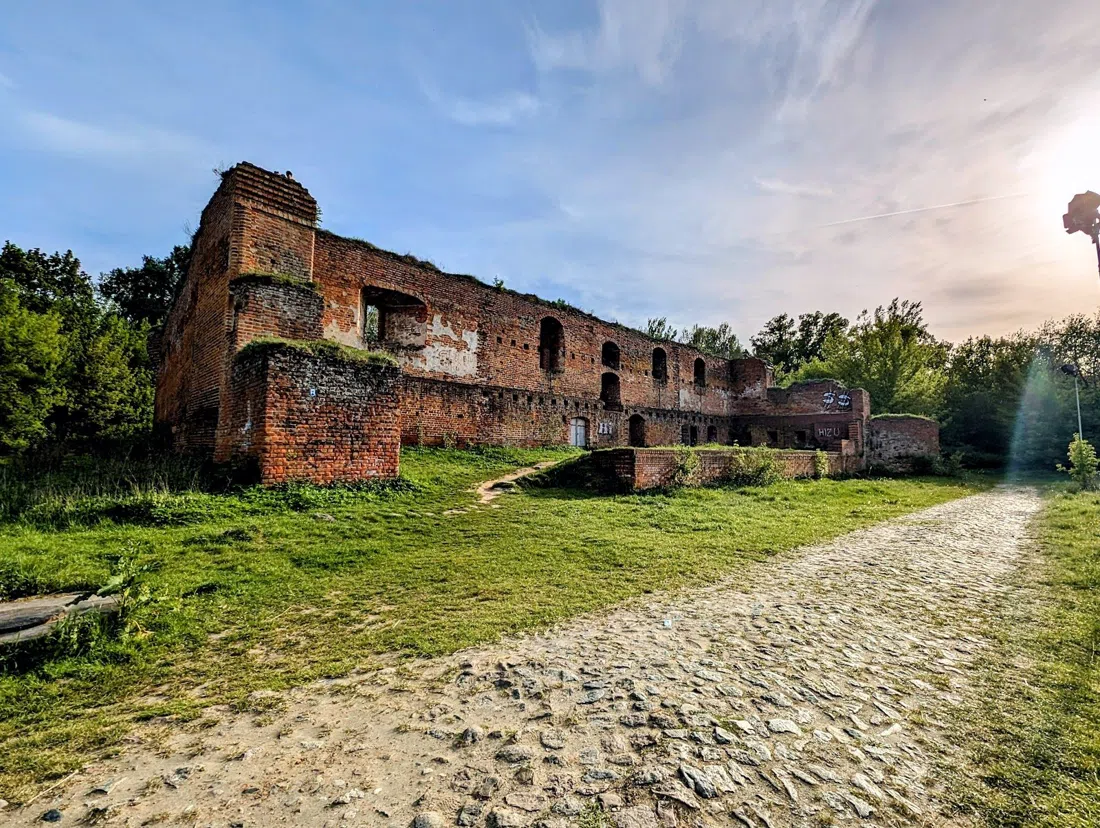
Across the Vistula, and almost never visited despite sitting in plain sight, are the Dybów Castle ruins (Zamek Dybów). This was a royal brick castle built in the 1420s, deliberately positioned across the river from Toruń's Teutonic castle as a rival royal stronghold, and it's a genuinely distinct site from the Teutonic ruins on the Old Town side, not a duplicate of them. The ruins are open-air with unrestricted access and suit any group size, and as of 3 August 2026 they've reopened for regular visits after a period of restricted access, which makes this a well-timed addition to a 2026 Toruń itinerary rather than a footnote. Almost nobody crosses the bridge for it, which is exactly the point.
Seeing It From the Water
All of the above is, individually, a walk between buildings. There's one vantage that puts the whole brick-Gothic skyline — walls, gate towers, cathedral, town hall — into a single frame, and it's not from a tower.
Toruńscy Flisacy (Toruń Rafters), the Vistula cruise operator, runs a six-boat fleet carrying up to 72 passengers in total, and it explicitly caters to organised groups as well as individual travellers, which makes it one of the more flexible bookings on this list. Cruises run roughly late April to the end of October, so the entire warm-weather visiting season is covered, and pricing runs in a rough band of 15 to 30 PLN per person depending on the length of cruise, bought either dockside or through the operator directly. The value here isn't the boat ride itself — it's the one photograph you can't get on foot: the whole wall-and-tower line reflected in the river, which is also, not coincidentally, the view that explains why the town was built exactly where it was.

Walking It With Someone Who Knows Where to Look
If the appeal of this route is specifically the stuff guidebooks skip — the New Town square, the wall fragments, the gates with no captions — a guided walk earns its keep more here than in most cities, because the gaps in self-guided coverage are the whole point of this itinerary.
Walkative! Toruń Old Town walking tour runs free, pay-what-you-wish public tours that are deliberately capped to small groups; if your party is eight or more, the operator asks you to book a separate private group tour rather than join the public departure, so check party size before you plan around the free option. The tours are built around exactly the kind of thing this piece is about — walls, gates, New Town sites — that most self-guided visitors walk straight past on their way to the tower and the market square. For a solo traveller or a couple, the free tour is close to a no-risk addition to a day in Toruń; for anything bigger than a small group, budget for the private option and book ahead.
Practical: Getting There, Cash, Timing, Budget
Toruń's Old Town is compact enough to cover on foot in a long day, with the New Town, the riverside walls and the tower sites all within a 20-30 minute walk of the market square; Dybów Castle is the one site that requires crossing the Vistula bridge. Trains arrive at Toruń Główny, on the opposite bank from the Old Town — a bus or a roughly 20-minute walk over the bridge gets you in — or at the smaller Toruń Miasto station, closer to the centre; check which one your train actually stops at before booking a hotel, since the difference matters for a first evening carrying luggage.
Carry some cash in złoty (PLN): several of the churches on this list operate on a donation basis rather than a fixed ticket, and small sites like the leaning tower's museum room are easier with cash in hand even where cards are accepted. Budget in PLN rather than converting every price as you go — a full day covering the tower, one of the two big tower climbs, a church or two and a short river cruise comes in comfortably under 100 PLN per person in entry fees, before food.
Timing matters in two specific ways: the Old Town Hall is closed Mondays, so don't build a Monday itinerary around the tower climb there, and the Vistula cruises run late April through October only, so a winter visit trades the river view for a quieter, colder walk along the same walls. Outside those two constraints, the Old Town's Gothic buildings are open year-round, and the walls along Bulwar Filadelfijski are always accessible.
If you're staying more than a day, base yourself inside or right against the Old Town rather than near the train station — everything on this route, bar Dybów Castle, is walkable from the market square. Start your search with a Torun hotel search, and for the wider practical rundown on getting around, eating and the rest of the city beyond this Gothic-brick route, see the full Torun guide.